Top 100 Best Universities in the United States
Discover the top 100 universities in the United States, featuring detailed insights into the leading institutions, their acceptance rates, programs, and more.


Top 100 Best Universities in the United States. The United States is home to some of the world’s most prestigious universities, attracting students from all corners of the globe seeking academic excellence and career advancement.
This comprehensive guide explores leading universities in the U.S., including insights into admissions trends, program strengths, financial considerations, and campus resources—helping prospective students make informed enrollment decisions (National Center for Education Statistics).
Whether you are researching best universities in USA for international students, affordable ivy league universities for undergraduates, or top ranked universities in america by acceptance rate, this guide provides actionable insights to support your academic journey.
Note: For broader insights into online education pathways, see our guide on Top Online Education Programs in the USA.
Best Universities in USA for International Students: Admissions Overview
What Are the Most Selective Universities in America?
Admissions selectivity varies widely across U.S. institutions. The most selective universities typically admit fewer than 10% of applicants, reflecting high demand and rigorous academic standards (College Scorecard):
Highly Selective Institutions (Acceptance Rate <10%)
- Harvard University (Cambridge, MA) – ~4%
- Stanford University (Stanford, CA) – ~4%
- Princeton University (Princeton, NJ) – ~5%
- Columbia University (New York, NY) – ~6%
- MIT (Cambridge, MA) – ~7%
Acceptance rates fluctuate annually. Always verify current statistics directly with institutions.
Top Ranked Universities in America by Acceptance Rate: Balanced Options
Which Reputable Universities Have Higher Acceptance Rates?
Many respected universities maintain acceptance rates above 50%, offering quality education with more accessible admissions pathways (NCES College Navigator):
- University of Kansas (Lawrence, KS) – ~93%
- University of Kentucky (Lexington, KY) – ~96%
- University of Colorado Boulder (Boulder, CO) – ~84%
- University of Arizona (Tucson, AZ) – ~85%
- Michigan State University (East Lansing, MI) – ~71%
Higher acceptance rates do not indicate lower quality; many public universities offer excellent programs, research opportunities, and strong alumni networks.
Affordable Ivy League Universities for Undergraduates: Cost Considerations
How Much Does It Cost to Attend Top U.S. Universities?
Tuition at elite private universities often exceeds $55,000 annually, though financial aid can significantly reduce net costs (Federal Student Aid):
| University | Published Tuition (Annual) | Financial Aid Availability |
|---|---|---|
| Harvard University | ~$57,261 | Need-based aid; meets 100% demonstrated need |
| Stanford University | ~$56,169 | Need-based aid; no loans for low-income families |
| MIT | ~$53,790 | Need-blind admissions; meets full demonstrated need |
| Princeton University | ~$53,890 | No-loan financial aid packages |
| University of Florida | ~$6,380 (in-state) | State funding; merit and need-based aid |
Sources: University official websites, College Scorecard, NCES. Always verify current tuition and aid policies directly with institutions, as costs change annually.
Important: Published tuition rarely reflects actual cost. Complete the FAFSA early and use each institution’s net price calculator for personalized estimates.
For strategies on managing education costs, see our guide on Best Education Loans: Rates, Providers and Options.
Best Online Universities in United States Accredited: Flexible Learning Paths

Which Accredited Universities Offer Quality Online Degrees?
Many reputable institutions now offer fully online or hybrid programs, expanding access for working adults and remote learners (Council for Higher Education Accreditation):
- Arizona State University – Regionally accredited; extensive online catalog
- University of Florida – Regionally accredited; strong online graduate programs
- Pennsylvania State University – Regionally accredited; World Campus platform
- University of Illinois – Regionally accredited; innovative online degrees
- Southern New Hampshire University – Regionally accredited; dedicated online division
Verify Accreditation: Always confirm that online programs hold regional accreditation through recognized bodies like SACSCOC, HLC, or NECHE. Accreditation ensures quality standards and eligibility for federal financial aid.
Universities in USA Without Application Fee for International Students
How to Reduce Application Costs When Applying to U.S. Universities?
Application fees can accumulate when applying to multiple institutions. Several universities waive fees under certain conditions (National Association for College Admission Counseling):
- Fee Waivers: Many institutions waive fees for students demonstrating financial need, veterans, or participants in specific outreach programs
- Early Application: Some universities waive fees for early action or early decision applicants
- Virtual Events: Attending virtual college fairs or campus visits may qualify for fee waivers
- Direct Inquiry: Contact admissions offices to discuss fee waiver options based on individual circumstances
Always review each university’s admissions website for current application fee policies and waiver eligibility criteria.
Best Colleges for Computer Science in United States Rankings
Which Universities Lead in Computer Science Education?
Computer science remains one of the most sought-after fields, with several universities recognized for research output, industry connections, and graduate outcomes (National Science Foundation):
- Massachusetts Institute of Technology (MIT) – Pioneering research in AI, systems, and theory
- Stanford University – Strong ties to Silicon Valley; entrepreneurship focus
- Carnegie Mellon University – Leader in robotics, software engineering, and human-computer interaction
- University of California, Berkeley – Open-source contributions; strong theoretical foundations
- Georgia Institute of Technology – Affordable tuition; robust online MS in CS program
When evaluating CS programs, consider faculty research areas, internship opportunities, career placement rates, and alumni networks in your target industry.
Top Business Schools in America for MBA Programs
Which Universities Offer Leading MBA Programs?
Business education remains a cornerstone of U.S. higher education, with several institutions consistently recognized for MBA quality (AACSB International):
- University of Pennsylvania (Wharton) – Finance, entrepreneurship, global business
- Stanford Graduate School of Business – Innovation, leadership, venture capital
- Harvard Business School – Case method; general management focus
- Northwestern (Kellogg) – Marketing, collaboration, experiential learning
- University of Chicago (Booth) – Analytics, economics, flexible curriculum
For insights on specialized business degrees, explore our guide on The 7 Best Real Estate Masters Programs in the USA.
Best Nursing Programs in USA Universities Accredited
Which Universities Offer Accredited Nursing Degrees?
Nursing education requires specialized accreditation to ensure clinical preparation and licensure eligibility (Commission on Collegiate Nursing Education):
- University of Pennsylvania – CCNE accredited; strong clinical partnerships
- Duke University – CCNE accredited; research-intensive curriculum
- Johns Hopkins University – CCNE accredited; leadership in healthcare innovation
- University of Washington – CCNE accredited; strong regional clinical network
- University of Florida – CCNE accredited; accessible public option
Important: Verify that nursing programs hold CCNE or ACEN accreditation. Graduation from an accredited program is typically required for RN licensure and advanced practice certification.
Universities in California with High Acceptance Rates
Which California Universities Offer Accessible Admissions?
California’s diverse higher education landscape includes both highly selective and more accessible institutions (California State University System):
- California State University campuses – Generally higher acceptance rates; strong regional focus
- University of California, Merced – Newest UC campus; growing programs
- San Diego State University – Balanced selectivity; strong business and engineering programs
- University of San Francisco – Private institution with holistic admissions review
Consider factors beyond acceptance rate, including program strength, location, campus culture, and career support services when evaluating California universities.
Best Universities in Texas for Engineering Programs

Which Texas Universities Excel in Engineering Education?
Texas hosts several universities recognized for engineering research, industry partnerships, and graduate outcomes (ABET Accreditation):
- University of Texas at Austin – ABET accredited; strong petroleum, electrical, and computer engineering
- Texas A&M University – ABET accredited; extensive research facilities; strong industry ties
- Rice University – ABET accredited; small class sizes; interdisciplinary focus
- University of Houston – ABET accredited; strong energy sector connections
- Texas Tech University – ABET accredited; affordable tuition; robust co-op programs
When evaluating engineering programs, verify ABET accreditation, review internship and co-op opportunities, and assess graduate employment rates in your target field.
Comprehensive Table: Leading U.S. Universities Overview
The following table highlights a selection of prominent U.S. universities across regions and institutional types. Rankings and metrics vary by source; this overview emphasizes diversity of options rather than strict hierarchy (NCES College Navigator):
| Institution | Location | Type | Notable Strengths | Acceptance Rate (Approx.) |
|---|---|---|---|---|
| Harvard University | Cambridge, MA | Private | Law, Medicine, Business | ~4% |
| Stanford University | Stanford, CA | Private | Engineering, CS, Entrepreneurship | ~4% |
| MIT | Cambridge, MA | Private | Engineering, Physics, CS | ~7% |
| University of California, Berkeley | Berkeley, CA | Public | Engineering, CS, Social Sciences | ~17% |
| University of Michigan | Ann Arbor, MI | Public | Business, Engineering, Public Policy | ~24% |
| University of Florida | Gainesville, FL | Public | Business, Engineering, Health Sciences | ~31% |
| University of Texas at Austin | Austin, TX | Public | Engineering, Business, CS | ~32% |
| Georgia Institute of Technology | Atlanta, GA | Public | Engineering, CS, Computing | ~21% |
| Pennsylvania State University | University Park, PA | Public | Engineering, Business, Earth Sciences | ~55% |
| Arizona State University | Tempe, AZ | Public | Business, Engineering, Online Education | ~90% |
| University of Kansas | Lawrence, KS | Public | Education, Engineering, Health | ~93% |
| University of Kentucky | Lexington, KY | Public | Health Sciences, Engineering, Agriculture | ~96% |
Note: This table represents a sample of institutions for illustrative purposes. Acceptance rates and program offerings change annually. Always verify current information directly with universities and consult multiple ranking sources for comprehensive evaluation.
Specialized and Accessible University Options
What About Universities Focused on Specific Student Needs?
Beyond traditional rankings, many institutions excel in serving specific populations or offering flexible learning formats:
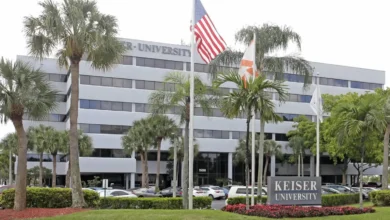
- Keiser University, Fort Lauderdale – Career-focused programs with on-campus and online options; personalized support for adult learners Learn more about Keiser University
- Southern New Hampshire University – Regionally accredited; extensive online catalog; transparent pricing
- Western Governors University – Competency-based education; affordable flat-rate tuition
- University of Maryland Global Campus – Designed for working adults; military-friendly policies
When evaluating specialized institutions, verify accreditation status, review graduate outcomes data, and assess alignment with your career goals.
Frequently Asked Questions: U.S. University Selection
How do I verify if a U.S. university is accredited?
Check the Council for Higher Education Accreditation database or the U.S. Department of Education accreditation portal. Regional accreditation is generally preferred for transferability and graduate school eligibility.
What factors should I consider beyond rankings?
Evaluate program strength in your field, graduation and job placement rates, financial aid availability, campus culture, location, and support services. Rankings emphasize selectivity and reputation, which may not align with your individual needs.
Can international students receive financial aid at U.S. universities?
Federal aid is generally limited to U.S. citizens and eligible non-citizens. However, many institutions offer merit scholarships or need-based aid to international students. Research each university’s policies and explore external scholarship opportunities.
How important is acceptance rate when choosing a university?
Acceptance rate reflects selectivity, not necessarily quality or fit. Focus on programs aligned with your goals, campus resources, and post-graduation outcomes rather than admissions statistics alone.
Where can I find reliable data on university outcomes?
Use the College Scorecard for publicly available data on graduation rates, earnings, and debt. Supplement with institutional websites, alumni networks, and independent reviews.
Conclusion: Choosing the Right University for Your Goals
Selecting a university is a significant decision that shapes academic, professional, and personal development. The United States offers diverse pathways—from highly selective research universities to accessible public institutions and flexible online programs.
Key considerations when evaluating U.S. universities:
- Verify accreditation status through CHEA or the U.S. Department of Education
- Assess program strength and outcomes in your field of interest
- Calculate net price using institutional calculators and FAFSA estimates
- Explore campus culture, location, and support services
- Review graduation rates, job placement data, and alumni networks
Whether pursuing undergraduate study, graduate education, or career advancement, thoughtful research and alignment with personal goals will guide you toward the right academic path.
For additional insights into online education options, see our guide on The 50 Best Online Universities in the USA.
Sources & References
- National Center for Education Statistics – College Navigator
- College Scorecard – Outcomes Data
- Council for Higher Education Accreditation
- Federal Student Aid – Financial Aid Information
- Commission on Collegiate Nursing Education (CCNE)
- AACSB International – Business Accreditation
- ABET – Engineering and Technology Accreditation
- National Science Foundation – Research Data
- University official websites and admissions resources